
Table of Contents
Understanding Car Title Loans and Your Financing Options
One way people address urgent expenses is through a car title loan. A car title loan is a short-term, high-cost loan secured by your vehicle’s title — the lender holds the title as collateral. The loan amount is based on your vehicle’s value, not credit score, so it can be an option for those with less-than-perfect credit.
These loans can be costly due to high fees and interest rates that are higher than traditional loans. Failing to repay could lead to vehicle repossession. The Consumer Financial Protection Bureau requires lenders to provide a full written disclosure before you sign, detailing the terms and risks.
Bad credit personal loans offer an alternative without vehicle title collateral. Loans Inc is not a lender; we connect you with participating independent lenders at no cost, with no obligation to accept any offer. An auto title loan referral service like Loans Inc helps you compare offers quickly. Start with a free application to see your options.
How Car Title Loans Work and How Lenders Determine Your Loan Amount
We explain the title loan process and how participating lenders assess your eligibility. Loans Inc is not a lender. We connect consumers with participating independent lenders and do not make credit decisions, set rates, or determine loan terms. Our free, two-minute online application collects basic information and vehicle details; how title loans work is outlined here so you can follow each step before sharing your information. When applying for car title loans, this initial submission simply lets lenders know you are interested — it does not guarantee approval.
- Submission and referral.
- You complete the short application and we forward it to participating independent lenders in your state. Each lender decides whether to proceed based on its policies and state law.
- Lender assessment of the vehicle.
- Lenders review year, make, model, mileage, overall condition, and comparable market value (often referencing industry valuation guides). Photographs and inspection notes help establish an appraised value.
- Income and repayment ability.
- Lenders evaluate income, employment stability, and other obligations to judge the borrower’s ability to repay. Credit history may be considered but is often secondary to vehicle value and income.
- Loan amount determination.
- Many lenders offer a loan equal to a portion of the vehicle’s appraised value; exact percentages and terms vary by lender and state law. The lender sets the specific amount, rates, fees, and repayment schedule and will provide a full written disclosure before you sign.
- Offer, acceptance, and documentation.
- If a lender makes an offer, you review the written terms, ask questions, and decide whether to accept. We do not originate loans or guarantee offers.
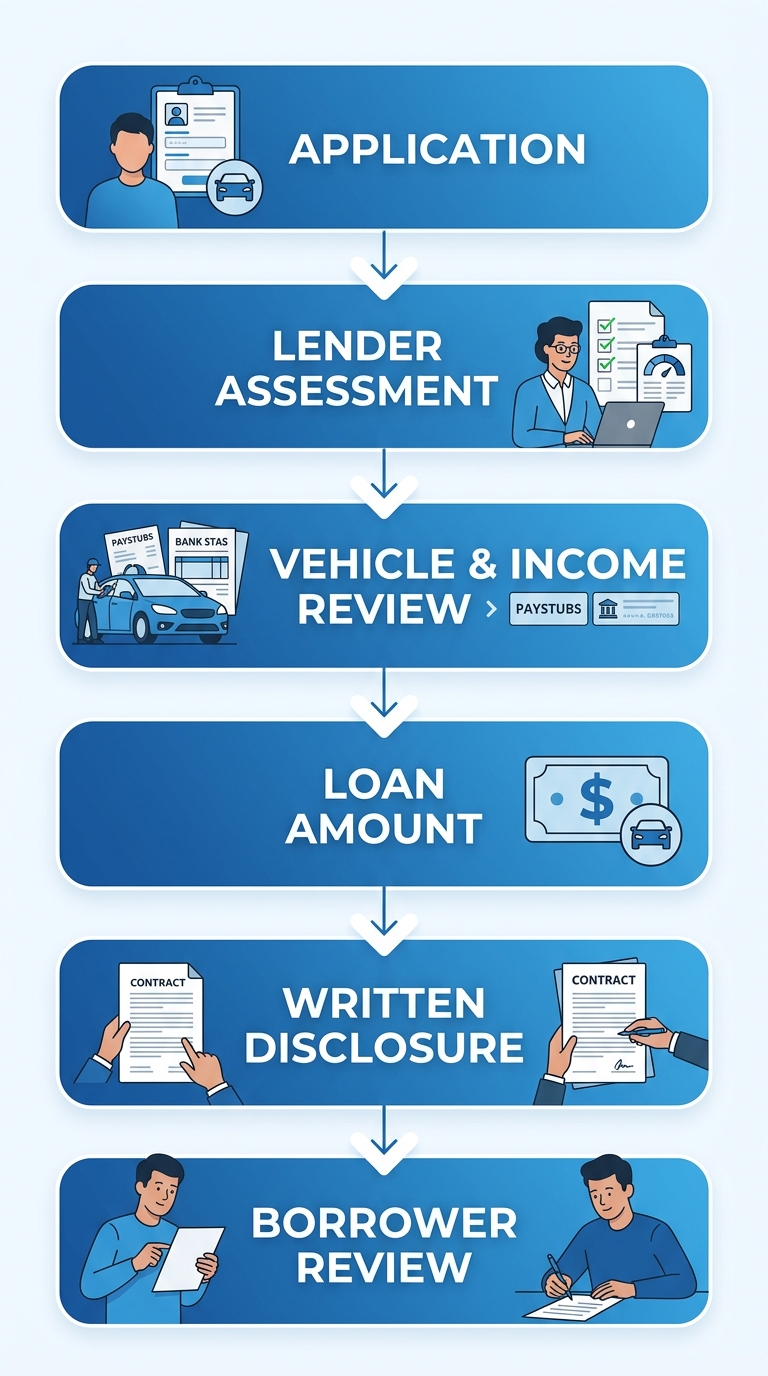
Required disclosures and risks: Loans Inc is not a lender. We connect consumers with participating independent lenders and do not make credit decisions, set rates, or determine loan terms. A title loan is secured by your vehicle. If you do not repay according to the loan agreement, the lender may repossess your vehicle. Late or missed payments may be reported and may affect your credit. This communication is an advertisement and does not represent a guaranteed offer; approval requires submission and review of a full application.
As an alternative, some borrowers explore bad credit personal loans from other providers, but options and approval standards vary. If you proceed, review the lender’s written disclosure carefully and be aware of vehicle repossession risk before signing.
Documents and Eligibility Requirements for a Car Title Loan
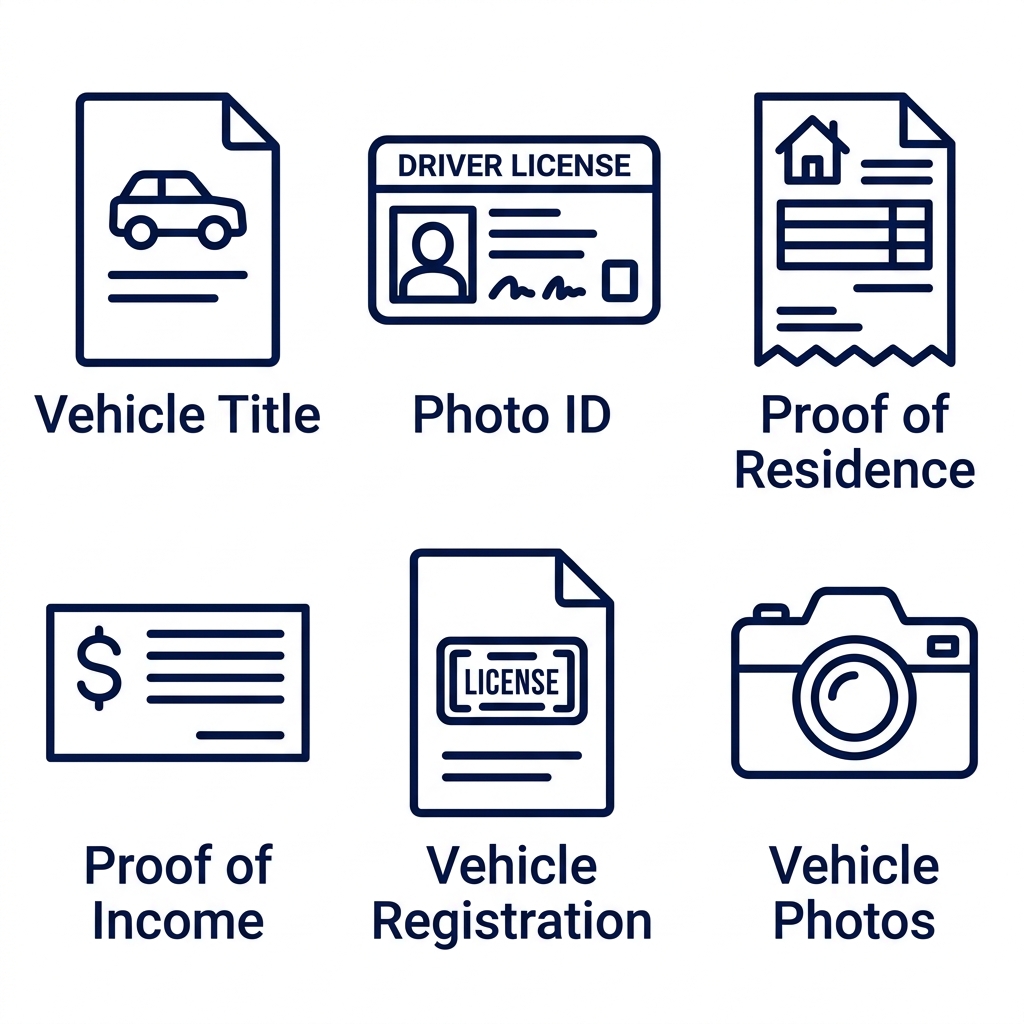
Now that you understand the basics of car title loans, let’s look at what you need to have ready to apply. Understanding the title loan requirements in advance can help you gather the necessary documents and confirm your eligibility before applying. When you apply for car title loans, the independent lender will ask for proof of identity, vehicle ownership, income, and residence. Preparing these items ahead of time can streamline the application process and help you avoid delays. While each lender sets its own criteria and state laws vary, the list below outlines the documents you are most likely to need.
Here are the typical documents you will need to provide:
- Vehicle Title – The title must be in your name and free of major liens. If there is an existing lien, the lender may require enough equity and might pay off the existing loan directly.
- Government-Issued Photo ID – A valid driver’s license, state ID, or passport to verify your identity and age.
- Proof of Residence – A recent utility bill, lease agreement, or bank statement showing your name and address.
- Proof of Income – Recent pay stubs, bank statements, or benefits letters to demonstrate your ability to repay the loan.
- Vehicle Registration and Insurance – Current registration and proof of insurance as required by your state.
- Clear Vehicle Photos – Multiple photos of the exterior and interior to show the vehicle’s condition and mileage.
Gathering these documents is the first step in your application. Once you have them ready, the lender will verify your eligibility.
To qualify for a car title loan, most lenders will require that you be at least 18 years old (age may vary by state), hold a clear title or sufficient equity in your vehicle, have a steady source of income, maintain a valid checking account in your name, and reside in a state where the lender operates. The independent lender — not Loans Inc — will assess your vehicle’s value and condition, as well as your ability to repay, before making a decision. Since car title loans are secured by your vehicle, they may offer an alternative for borrowers who do not qualify for traditional bad credit personal loans. However, if you fail to meet repayment obligations, the lender may repossess your vehicle.
Requirements vary by state and lender, so we encourage you to review our state-specific guides for local details. Remember, Loans Inc is not a lender; we connect you with participating independent lenders. Approval is subject to a full application review, and you will receive a full written disclosure before signing. Free to Apply, No Obligation.
Once you have your documents ready, the online application takes just two minutes.
Driving Your Car While It’s Used as Collateral
When you consider car title loans, a common question is whether you can still drive your car while the loan is active. The short answer is yes — you can continue driving your vehicle for personal use as long as you make timely payments under your loan agreement. The lender holds the title as a lien, which means they have a legal claim on the vehicle until you fully repay the loan. However, the lender does not take physical possession of your car. You keep your keys, your registration, and your daily driving routine intact.
With most car title loans, the arrangement is straightforward. You provide the lender with your vehicle title as security, but the car stays parked in your driveway and available for your everyday needs — commuting to work, running errands, or managing family responsibilities. The lien simply exists on paper, recorded with your state’s motor vehicle department, and it does not interfere with your ownership rights while you remain in good standing with your payments.
While you keep the car, you also keep all the responsibilities that come with vehicle ownership. You remain responsible for maintaining valid auto insurance, keeping up with routine maintenance, renewing your registration on time, and paying any traffic fines or tickets. These obligations do not transfer to the lender just because they hold the title as collateral. Additionally, some lenders may require installation of a GPS tracking device on your car or impose mileage restrictions during the loan term. These conditions can vary by lender and by state, so reviewing your specific loan agreement carefully is essential to understanding any driving-related restrictions before you commit.
It is equally important to understand the risks involved. A title loan is secured by your vehicle. If you do not repay according to the loan agreement, the lender may repossess your vehicle. Depending on state law, repossession can sometimes occur without prior notice, and the financial consequences can extend beyond losing your car — missed payments may also be reported and may affect your credit. For borrowers exploring funding options, it is worth noting that unlike bad credit personal loans, title loans require your car as collateral, which introduces the direct risk of vehicle repossession if you default. The Consumer Financial Protection Bureau provides guidance on borrower rights and repossession procedures, and we encourage you to understand those protections before entering any title-secured agreement.
Ultimately, the ability to keep driving your car is one of the central features of a title loan, but it comes with both obligations and real risks. We recommend reading every detail of your loan agreement so you know exactly what is expected of you and what conditions apply throughout the repayment period. For a complete walkthrough of how car title loans work, visit our car title loans guide.
What Happens If You Can’t Repay: Repossession and Your Rights
A title loan is secured by your vehicle. If you do not repay according to the loan agreement, the lender may repossess your vehicle. That is the essential risk of car title loans — but understanding the repossession process and your rights can help you navigate the situation. Loans Inc car title loans are provided by independent lenders through our matching service, and we emphasize that we are not a lender; the repossession risk stems solely from the loan contract you sign with the lender. Applying through our service is free and comes with no obligation, but once you accept an offer, the vehicle becomes collateral for the debt.
Vehicle repossession typically happens without prior warning. However, the lender cannot breach the peace: they may not use force, threaten violence, or break into a locked garage to take your car. Repossession often occurs from public streets or driveways. If you miss one or more payments, the lender has the legal right to seize the vehicle securing the loan.
Once your car is repossessed, you retain important protections. According to the Consumer Financial Protection Bureau, you have the right to recover any personal property left inside the vehicle — the lender cannot keep your belongings. In many states, you may also have the right to reinstate the loan by catching up on missed payments plus any fees allowed by law. Finally, you have the right to redeem the vehicle before it is sold by paying the full loan balance, which can be a path to getting your car back if you can arrange the funds quickly.
If the lender sells the repossessed vehicle, you could still owe a deficiency balance — the difference between the sale price and the amount you owed. That means repossession may not end your financial responsibility. Some borrowers with bad credit consider personal loans to avoid vehicle repossession, but those alternatives have their own qualification requirements and may not be available to everyone.
If you anticipate difficulty making a payment, contact your lender immediately. They may be able to offer temporary forbearance or modified terms that help you avoid repossession. We also encourage you to review your state’s laws, as reinstatement and redemption rights can vary. If you are already facing repayment challenges, the next section covers practical steps you can take to avoid repossession and work toward a solution.
Car Title Loan Alternatives: Bad Credit Personal Loans and Other Options
According to the Consumer Financial Protection Bureau, car title loans often come with high fees and put your vehicle at risk of repossession. For those with less-than-perfect credit, these short-term loans can lead to a cycle of debt. Exploring safer alternatives that do not require collateral can help you avoid losing your car and improve your financial stability.
Bad credit personal loans from independent lenders are a common alternative to title loans. Unlike car title loans, these loans are typically unsecured, meaning you do not have to put your vehicle on the line. The Consumer Financial Protection Bureau advises comparing loan offers to find the most affordable terms. While interest rates may still be higher than those for prime borrowers, many online lenders offer fixed monthly payments and longer repayment schedules, which can make budgeting easier. Moreover, repaying a personal loan on time may gradually improve your credit history.
Beyond personal loans, several other options can provide funds without the threat of vehicle repossession:
- Credit union loans often offer flexible terms for members.
- Borrowing from family or friends can come with little or no interest.
- Secured personal loans using savings or other collateral avoid risking your car.
- Debt management programs consolidate payments and may reduce interest rates.
A key advantage of these alternatives is avoiding vehicle repossession. When you take out a car title loan, your vehicle serves as collateral; if you cannot repay according to the agreement, the lender may repossess it. Unsecured options, however, do not tie your car to the debt, giving you peace of mind even during financial hardship.
If you are still interested in comparing title loan offers, you can use our title loan matching service to quickly connect with participating independent lenders who may present loan terms. Loans Inc is not a lender. We connect consumers with independent lenders and do not guarantee any specific offer, rate, or approval.
Making an Informed Decision About Car Title Loans
Before you decide to apply for car title loans, it’s important to understand the commitment. At Loans Inc, we connect you with participating independent lenders through a simple, free application that carries no obligation. Here are the key points to evaluate before you move forward.
- A title loan is secured by your vehicle. Failure to repay could lead to vehicle repossession, and late or missed payments may be reported to credit bureaus.
- Loans Inc is not a lender and does not set rates or terms. The lender you are matched with will provide a full written disclosure before you sign. The Consumer Financial Protection Bureau stresses the importance of reading this document carefully.
- Compare offers from multiple participating lenders rather than accepting the first one. Loan terms, fees, and interest rates can vary widely by lender and state.
- Consider alternatives if you are unsure about placing your vehicle at risk. Bad credit personal loans or other borrowing options may better suit your situation.
If car title loans seem right for you, compare multiple lender offers and read the full disclosure before signing.
Resources
What to Know Before You Apply
- Who we are: Loans Inc is not a lender. We connect consumers with participating independent lenders. We do not make credit decisions, set rates, or determine loan terms.
- Vehicle risk: A title loan is secured by your vehicle. If you do not repay according to the loan agreement, the lender may repossess your vehicle. Late or missed payments may be reported and may affect your credit.
- Cost: Rates, fees, and repayment terms are set by the lender you are matched with and vary by state. Before you sign, the lender will give you a full written disclosure of the APR, fees, payment schedule, and total cost. Loans Inc does not set or guarantee any loan terms.
- Funding: Many lenders in our network can fund approved loans as soon as the same business day. Timing depends on the lender's approval, when you apply, document verification, and your bank's processing.
- Other options: Lower-cost options may be available. Compare them in our guide to title loan alternatives.
- Your information: When you apply, your application is sent to participating lenders. Read how our matching service works and the difference between a direct lender, a broker, and a lead generator.
Loans, Inc · 495 N IL Route 21, Ste 111, Gurnee, IL 60031 · 847-558-2405 · customersupport@loansinc.com