
Table of Contents
Understanding Title Loans and Loans Inc’s Service
What exactly is a title loan? A title loan is secured by your vehicle. According to the Consumer Financial Protection Bureau (CFPB), an auto title loan uses your paid-off vehicle as collateral. If you do not repay according to the loan agreement, the lender may repossess your vehicle. Loans Inc is not a lender. We connect consumers with participating independent lenders.
Through our title loan matching service, we help you find options in your state. Start by completing our 2-minute online form; we then match you with participating independent lenders. Before you sign, the lender will provide a full written disclosure of rates, fees, and terms. The CFPB recommends that consumers understand the risks, including vehicle repossession and costly terms, before taking out a title loan. A title loan is a form of auto equity loan, and for qualifying borrowers, it can be a practical alternative alongside bad credit installment loans. Even if your credit is less than perfect, you can use our matching service to compare options from independent lenders, though approval is not guaranteed.
Here’s how the process works for you. The benefits of using our matching service include:
- Free to Apply
- No Obligation
- Same-Day Funding Possible
- Full Written Disclosure Before You Sign
Understanding these risks and your lender’s terms is essential before moving forward. We’ll now explain exactly how the matching process works, so you can decide if it’s right for you.
The Loan Matching Process: Risks, Lender Determination, and Auto Equity Options
Now that you have an overview of our services, it is important to understand exactly how we connect you with financing options. Our process is designed to be transparent and informative, ensuring you know what to expect at every step. This section explains how participating lenders are selected, the serious risks associated with vehicle-secured borrowing, and the key differences between a standard title loan and an auto equity loan.
How Loans Inc Determines Participating Lenders
Loans Inc connects you with a curated network of independent lenders. When you submit your information through our title loan application platform, our proprietary technology immediately gets to work. The system transmits your application data exclusively to licensed lenders who are authorized to operate within your specific state, applying state-specific filters to ensure all matches comply with local regulations.
It is critical to understand our role in this process. Loans Inc is not a lender. We connect consumers with participating independent lenders and do not make credit decisions, set rates, or determine loan terms. We do not evaluate your creditworthiness or decide which loan product you qualify for. The lenders in our network independently review your information using their own criteria before making any offer. This referral model helps people with less-than-perfect credit explore potential options that align with their state’s legal framework, but there is never an obligation to accept any offer you receive.
Understanding Title Loan Risks and Repossession
Now that you understand how lenders are selected, it is vital to examine the serious risks involved with vehicle-secured borrowing. A title loan is a short-term loan secured by your vehicle’s title. According to the Consumer Financial Protection Bureau, these products often have extremely high annual percentage rates (APRs)–frequently in the triple digits–and very short repayment windows, typically 15 to 30 days. This combination can make title loans incredibly expensive quickly.
The most significant risk is vehicle repossession. A title loan is secured by your vehicle. If you do not repay according to the loan agreement, the lender may repossess your vehicle. This means failing to pay on time can result in losing your car, which for many people is essential for getting to work and managing daily life. Consumer Financial Protection Bureau guidance also warns about the risk of a cycle of debt, where borrowers are forced to renew or roll over their loan because they cannot afford the lump-sum repayment, incurring more fees each time. The lender you are matched with will provide a full written disclosure before you sign, and you must carefully read and understand this worst-case scenario before agreeing to any loan terms.
Auto Equity Loans vs. Title Loans
If you have a vehicle with significant value, you may encounter an alternative product known as an auto equity loan. These are distinct from the short-term loans typically matched through our network, though Loans Inc’s network may include lenders offering auto equity products where available by state. An auto equity loan is based on your vehicle’s equity, which is calculated using a simple formula: the current market value of your car minus any outstanding loan balance you still owe. For example, if your car is worth $15,000 and you still owe $5,000, you have $10,000 in equity.
The primary difference is in structure. While a title loan typically requires a clear title and is designed for small, short-term emergency cash, an auto equity loan functions more like a longer-term installment loan. The lender places a lien on the title, but you continue to keep and drive your car. Those exploring options for less-than-perfect credit, such as bad credit installment loans, may find that an auto equity loan offers a longer repayment structure compared to a traditional title loan.
The following table compares the key features of auto equity loans and title loans to help you quickly understand their structural and risk differences:
| Feature | Auto Equity Loan | Title Loan |
|---|---|---|
| What it is | A loan based on your vehicle’s equity, where you may keep the car but the lender places a lien on the title. Sometimes called a second lien. | A short-term secured loan where the lender holds the vehicle title as collateral and you typically surrender the physical title. |
| Do you keep the car? | Yes, you keep and drive the car. | Yes, in most states you keep and drive the car, but the lender can repossess if default. |
| Existing loan allowed? | Often requires that you have significant equity; some lenders will lend even if you owe on the car. | Typically requires a clear title (no outstanding loans), though some lenders accept vehicles with existing loans if equity is high. |
| Loan amount | Based on a percentage of the vehicle’s equity; can be larger amounts. | Usually 25%-50% of vehicle value; smaller emergency-type loans. |
| Typical term | Longer terms (months to years), similar to a personal loan. | Short term (15-30 days typical), sometimes renewable. |
| APR range | Generally lower than title loans, but still high compared to unsecured loans; varies by state and credit. | Can be extremely high, often in triple digits; state caps apply. |
This side-by-side view highlights that while auto equity loans can offer longer terms and potentially larger loan amounts based on your equity stake, title loans are generally structured for immediate, small-dollar needs with a much shorter fuse. No matter which product you consider, the security of your vehicle is directly tied to your repayment, making it essential to borrow only what you can realistically afford to pay back on time.
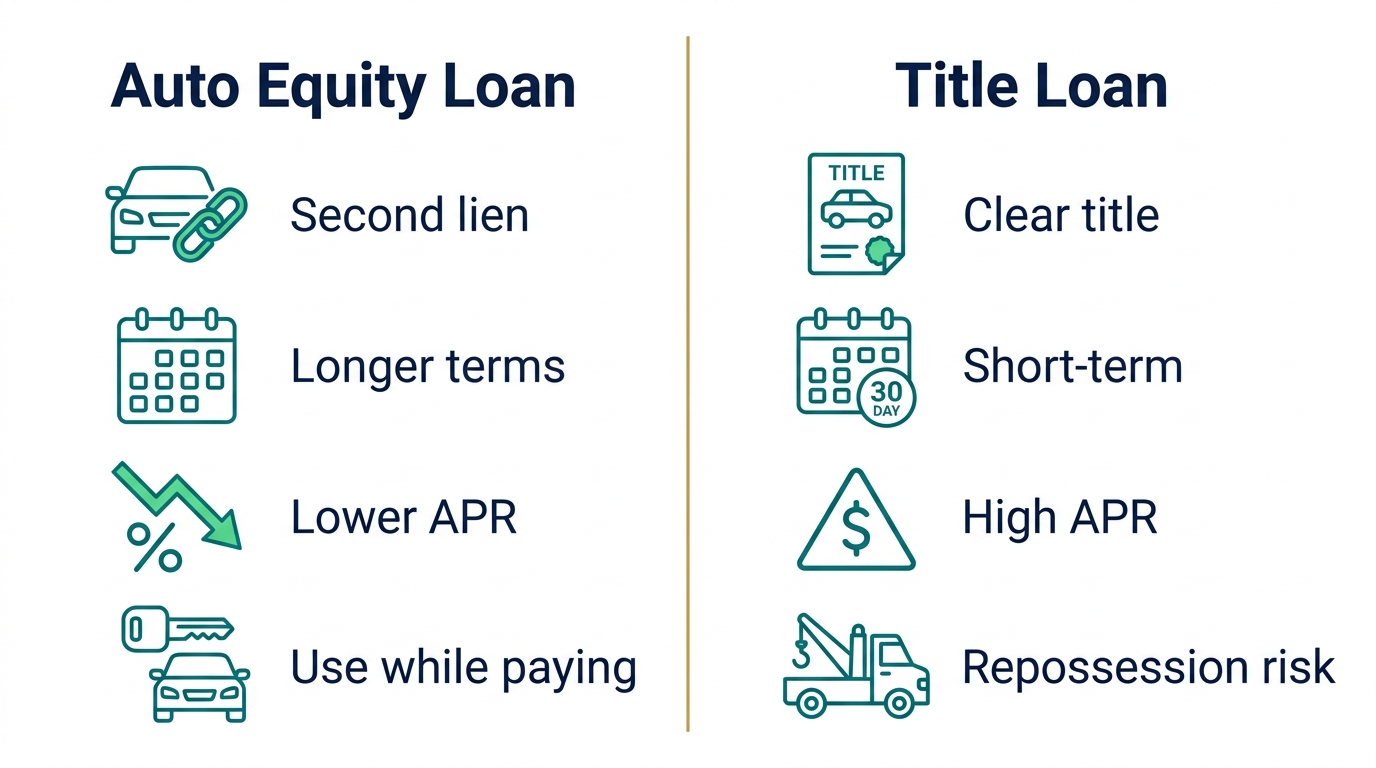
The distinction between these two vehicle-secured products is significant. While Loans Inc primarily connects consumers with lenders offering title loans, understanding how auto equity loans work gives you a more complete picture of your borrowing options. If you have equity in your vehicle, exploring longer-term alternatives may be a prudent step; our next section covers how to begin the application process.
Step-by-Step Guide to Applying for a Loan with Loans Inc
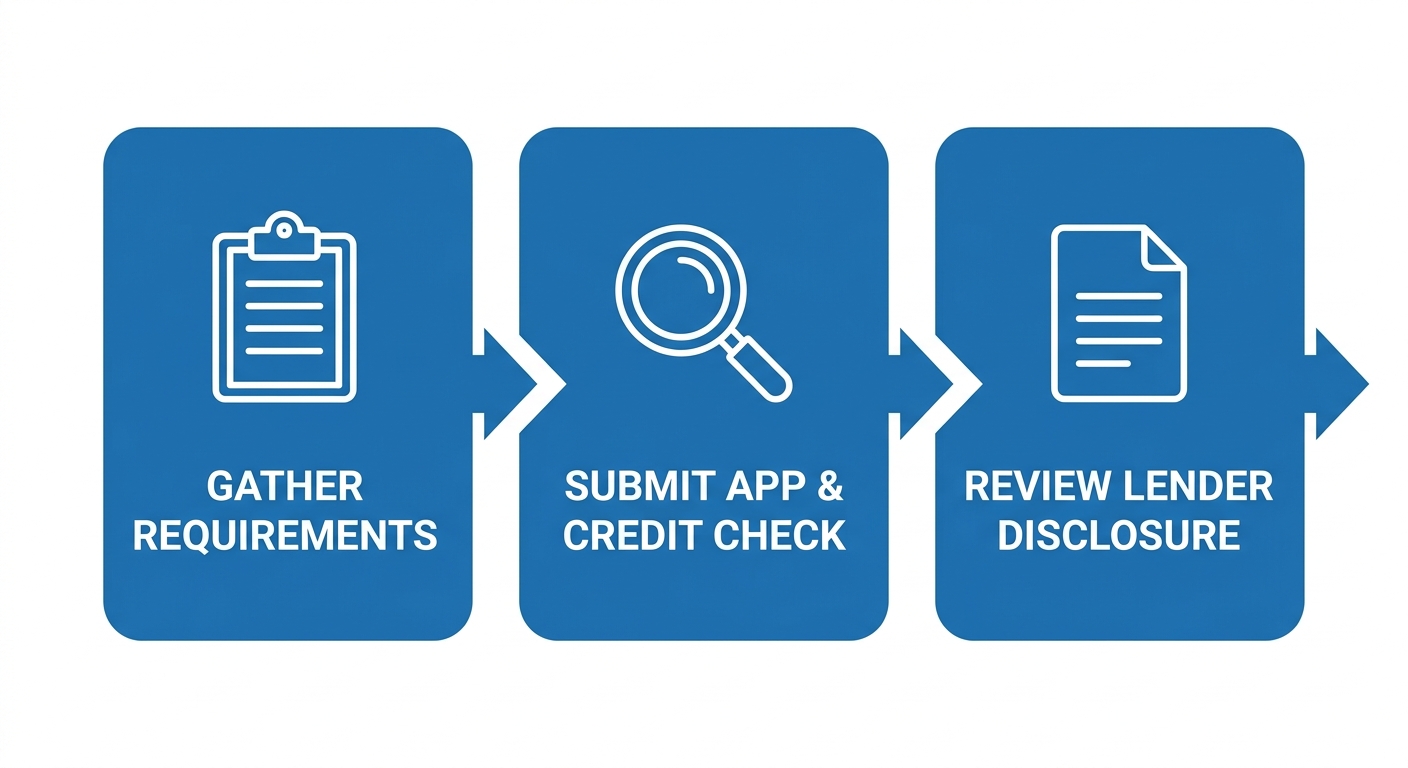
Now that you understand how the platform works, this guide walks you through applying with Loans Inc. We are not a lender; we connect you with independent lenders. The application is free and has no obligation. Follow these steps to prepare your documents, navigate credit checks, and review lender disclosures.
Meeting the Application Requirements
Before you start, gather the required documents. Our lender network typically asks for:
- A valid government-issued photo ID, such as a driver’s license or passport.
- Proof of income: pay stubs, bank statements, or tax returns.
- Vehicle title (for auto equity loans): must be in your name and free of liens.
- Active checking account (required for installment loans).
- References may be requested.
Even with a credit score around 500, many network lenders evaluate applications. For bad credit installment loans, a checking account and proof of steady income are essential. Submitting your information to Loans Inc is free and takes only a few minutes. We forward your details to lenders; there is no impact on your credit at this stage. Remember, a title loan is secured by your vehicle; failure to repay can result in repossession.
The application is preliminary and non-binding; you are not obligated to accept any offer. Loans Inc is not a lender–we simply connect you with independent lenders who make all credit and approval decisions. Once matched, you will receive a full written disclosure before signing. Review it carefully, comparing APRs and fees. We recommend having documents ready to speed up the process. Checking your credit report beforehand can help you understand where you stand. Bad credit installment loans rely more on income stability than credit history. We always encourage reading the full disclosure and asking questions. Title loan terms and availability depend on state regulations. Understanding requirements upfront helps you avoid delays. Loans Inc’s service is free and confidential.
Navigating Credit Checks and Approvals
The credit check process depends on loan type. When you apply through Loans Inc, we forward your information to lenders; we are not a lender and do not make credit decisions. For installment loans, a soft credit pull is typical–it does not impact your score. If you proceed, the lender may perform a hard inquiry, which can appear on your report and may slightly lower your score. Title lenders, however, often base decisions on vehicle equity rather than credit history, so applicants with lower scores may still qualify for auto equity loans. Be wary of “no credit check” promises, as they can carry significantly higher APRs. Using Loans Inc is a no-obligation step; submitting an inquiry doesn’t commit you to any loan. Your credit is not affected during this matching phase. Even with past credit challenges, many lenders in our network consider a broad range of profiles. Review the full disclosure before accepting any offer. Some lenders may offer same-day funding upon approval, but timing varies. The matching service is free.
Understanding State-Specific Disclosures
Once matched, the lender provides a written disclosure before you sign. It covers APR, fees, payment schedule, and repossession. State laws matter. For example, Florida title loan regulations require full disclosure. The table contrasts Florida, Tennessee, and Virginia rules.
| Regulation | Florida | Tennessee | Virginia |
|---|---|---|---|
| Maximum loan amount | No specific max, but title loan must not exceed fair market value | No maximum specified in statute | Generally limited to 50% of vehicle value up to $2,500 |
| Maximum term | 30 days; can be extended up to 60 days after rollover | 30 days | 120 days |
| APR / interest cap | Interest capped at 30% per annum for first $3,000 (heavy regulation on fees) | Interest capped at 2% per month plus fees; effective APR can exceed 260% | Tiered interest: 36% on first $500, 24% on $500-$2,500; title loan APR can still be high |
| Repossession rules | Lender must follow Florida repossession laws; borrower has a right to redeem | Lender may repossess after default; no right to cure unless contract allows | Lender may repossess; borrower has 15 days after default to cure before repossession can occur |
Because regulations vary, review the disclosure against your state’s limits. The CFPB confirms state lending laws differ. This is an advertisement; approval requires a full application.
State Regulations, APR Ranges, and Managing Title Loan Risks
State title loan regulations vary significantly across the United States. Some states impose strict APR caps, mandatory right-to-cure periods that give borrowers extra time to pay before repossession, and maximum loan term limits to prevent long-term debt. In other states, however, regulation is far lighter — a fact highlighted by general market data from the Consumer Financial Protection Bureau (CFPB). At Loans Inc, we help you understand these state-level differences, but we are not a lender. We connect consumers with independent participating lenders who set all rates, fees, and terms after you submit an application.
Title loans can provide fast cash, but they carry serious risks. In states where APR caps are weak or nonexistent, annual percentage rates can reach triple-digit levels. Short repayment windows and rollovers can create a debt cycle where fees pile up without reducing what you owe. Lenders may repossess your car without a court order if you miss payments, and some contracts include hidden fees for add-ons like insurance. The table below summarizes these key risks and steps you can take to protect yourself.
| Risk | Why it matters | How to protect yourself |
|---|---|---|
| Vehicle repossession | If you can’t repay, the lender can take your car–often without court order. | Read the contract; know your state’s right-to-cure period; consider alternatives if repayment is uncertain. |
| Triple-digit APR | Annual rates over 200% can quickly escalate the debt. | Compare the disclosure with your state’s rate cap; ask about all fees; use installment loans where possible. |
| Debt cycle | Rollovers and renewals can trap you in a spiral where you pay only fees and never the principal. | Limit rollovers; choose a lender that allows early pay-off without penalty; have a repayment plan before borrowing. |
| Hidden fees and add-ons | Some lenders bundle unnecessary insurance or roadside assistance that inflate the loan cost. | Carefully review each line item on the disclosure; decline optional products you don’t need. |
These strategies all depend on knowing your state’s specific protections. For example, right-to-cure laws give you a window to catch up on payments before repossession — but that period varies by state. Always compare the lender’s full written disclosure with your state’s rate cap and fee limits. If you’re uneasy about the terms, alternatives like bad credit installment loans or auto equity loans may offer a more affordable path, though they too depend on state lending laws.
For residents of Tennessee, understanding Tennessee title loan regulations is especially important because Tennessee allows title loans with no interest rate cap. Always review the lender’s full written disclosure before you sign.
Loans Inc is not a lender. We connect consumers with independent lenders who set all terms. A title loan is secured by your vehicle; non-repayment can result in repossession. You can apply free with no obligation. Understanding state regulations is the first step to borrowing wisely. Next, we’ll outline how Loans Inc can connect you with participating lenders.
Common Questions About Loans Inc and Loan Options
We understand that navigating loan options can be confusing, so we have compiled answers to the most common questions about our service. This section clarifies how we work and what you can expect when you apply through loans inc.
Is Loans Inc a lender?
Loans Inc is not a lender. We connect consumers with participating independent lenders. Our free application takes about two minutes and carries no obligation to accept any offer you may receive. All rates, fees, and terms are set directly by the independent lender, who will provide a full written disclosure before you sign.
What types of loans can I get?
Through our network, you can explore auto equity loans, a type of loan secured by your vehicle, or bad credit installment loans for those seeking an alternative to a payday loan. We help people with less-than-perfect credit access potential funding, and you can review authoritative guidance on these loan types and your rights from the Consumer Financial Protection Bureau.
Are there state-specific rules I should know?
For clients in Virginia, specific rules apply. Review our complete guide on Virginia title loan regulations before applying.
Your Next Step with Loans Inc’s Free Application
Ready to get started with Loans Inc? Your next step is free and carries no obligation. Our simple application takes about two minutes, and Same-Day Funding Possible after lender approval. Loans Inc is not a lender. We connect consumers with participating independent lenders who consider a range of credit profiles, including less-than-perfect credit. Lenders in our network offer options like bad credit installment loans and auto equity loans. Per Consumer Financial Protection Bureau standards, you’ll receive Full Written Disclosure Before You Sign. Start your free application now.
Resources
What to Know Before You Apply
- Who we are: Loans Inc is not a lender. We connect consumers with participating independent lenders. We do not make credit decisions, set rates, or determine loan terms.
- Vehicle risk: A title loan is secured by your vehicle. If you do not repay according to the loan agreement, the lender may repossess your vehicle. Late or missed payments may be reported and may affect your credit.
- Cost: Rates, fees, and repayment terms are set by the lender you are matched with and vary by state. Before you sign, the lender will give you a full written disclosure of the APR, fees, payment schedule, and total cost. Loans Inc does not set or guarantee any loan terms.
- Funding: Many lenders in our network can fund approved loans as soon as the same business day. Timing depends on the lender's approval, when you apply, document verification, and your bank's processing.
- Other options: Lower-cost options may be available. Compare them in our guide to title loan alternatives.
- Your information: When you apply, your application is sent to participating lenders. Read how our matching service works and the difference between a direct lender, a broker, and a lead generator.
Loans, Inc · 495 N IL Route 21, Ste 111, Gurnee, IL 60031 · 847-558-2405 · customersupport@loansinc.com